01
What to know
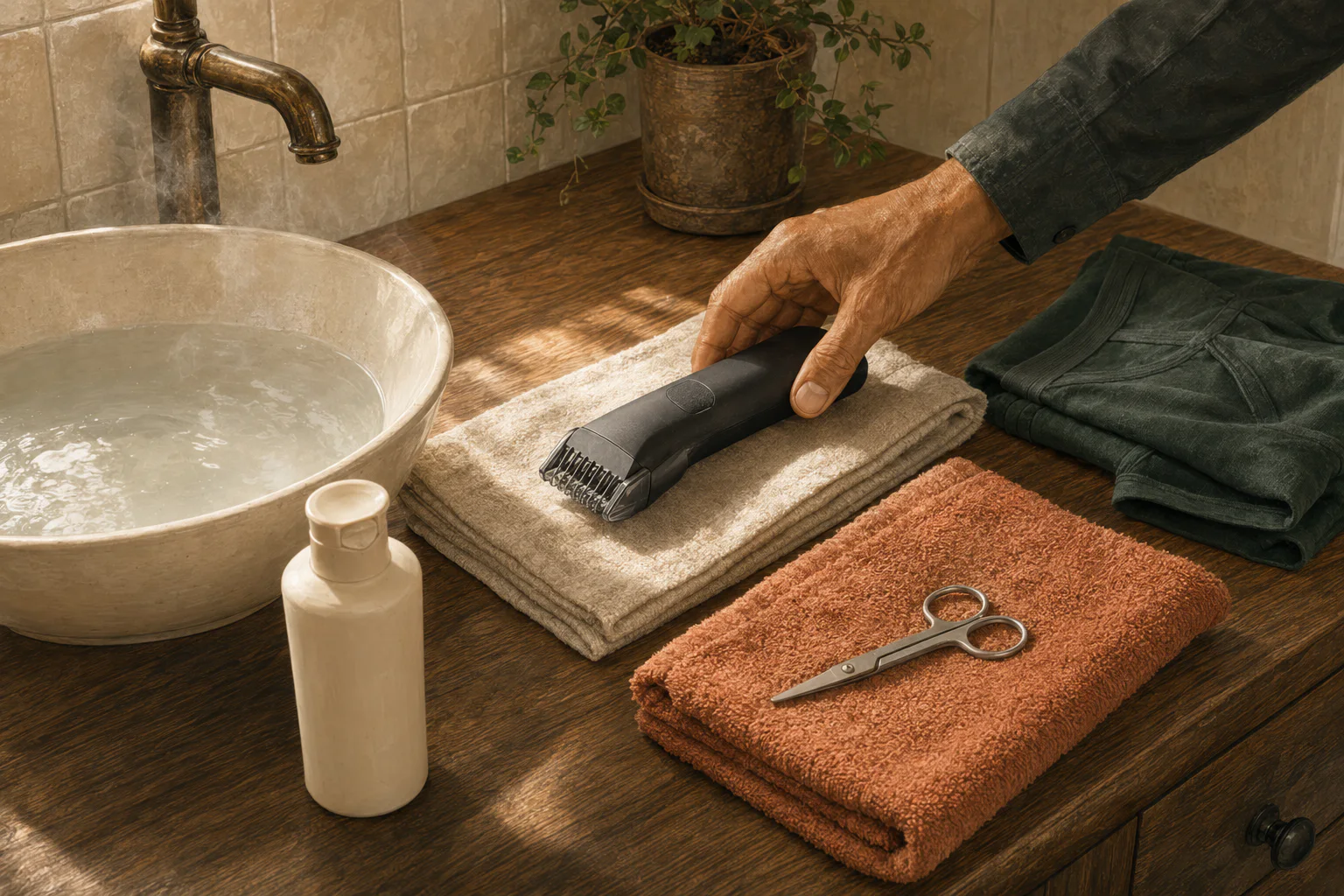
- A clean trimmer with a guard generally creates less close skin contact than a razor.
- Shaving against the grain, repeated passes, shared tools, and fragranced products can increase irritation.
- Pus, spreading redness, fever, genital sores, discharge, or burning urination are not routine razor burn.
What people often get wrong
A similar-looking photo or one matching symptom cannot confirm a cause. Timing, change, examination, and sometimes testing matter.
02
Useful next steps
- Pause hair removal while skin is inflamed, wash gently, and avoid picking or digging out hairs.
- Clean tools between uses and never share blades or trimmers.
When to get care
Do not rely on guesswork when the pattern changes.
- Arrange care for worsening pain, warmth, pus, spreading redness, recurrent deep bumps, sores, or symptoms after sexual exposure.
- Get prompt care for fever or rapidly spreading swelling.
03
What a clinician may ask
- When did you first notice it, and is it changing?
- Is there pain, discharge, bleeding, fever, urinary change, or loss of function?
- Were there recent medicines, illness, injury, sexual contact, products, or procedures?